A Picture of Life on the Farm

Recently my Facebook timeline has been full of people doing a “10-day farming and ranching challenge.”  A picture each day for 10 days showing what life on the farm looks like but without any explanations.  Just a picture, no words. 

Now, I know that a picture is worth a thousand words, but sometimes a little context is a good thing.  This week, I am going to take a little detour from our meat safety and quality conversations and share a little insight into what being involved in agriculture has looked like for me. 
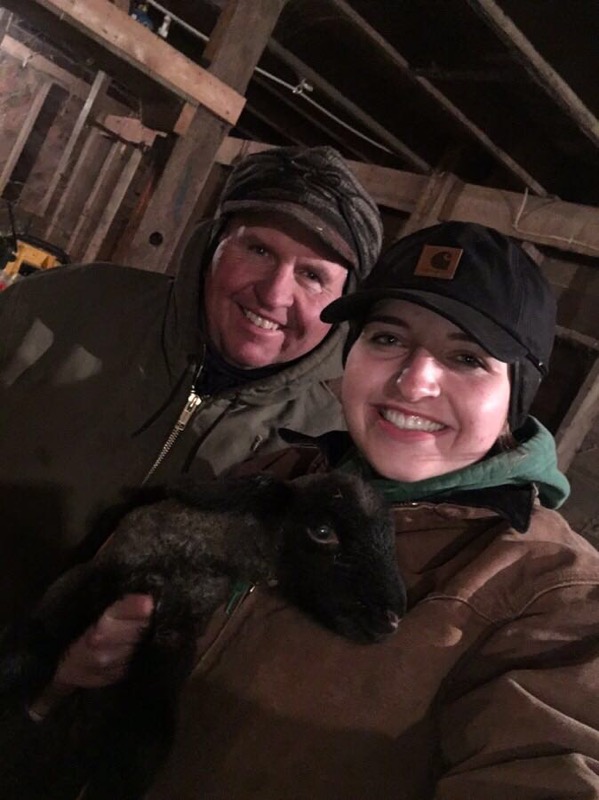
This time of year is so exciting on the farm because babies are being born!  I have so many great memories going out late at night with my dad to see if any lambs or calves were born. Right now, my family is in the midst of both lambing and calving.  There have been some extremely cold temps and snowy days the past few months in South Dakota; however, it doesn’t matter what the temperature is outside, farmers and ranchers don’t get a snow day.  They go to work, day and night, to ensure that their livestock is cared for.

Blue sky, green grass, black cattle, one of my favorite views!  Every summer, we bring our cattle to the pasture for a few months.  After long, dreary winters, it is so encouraging to see new life, both in the vegetation and in the baby calves! 

Putting up hay.  Not exactly the most fun job on the farm (or photogenic), but it’s work that needs to be done.  Typically, it’s the hottest days of the summer when the hay is ready to be put into the barn.  It’s a hot, dusty, job.  Storing hay during the summer gives us an ample supply to use during the winter during lambing and calving.  Square bales (like what is in the picture), can be used for bedding or as feed, depending on what the bale is made of.  It may be a lot of work in the summer, but when winter comes along we are sure thankful that the job got done!

I know that this isn’t a farm picture, but I had to include it.  It is still crazy to me to think that someday I am going to be a meat scientist.  How crazy is that?!  The agricultural industry offers so many opportunities for careers outside of farming and ranching; meat science, nutrition, genetics, and so much more.  I am so excited to see where this path leads me and what opportunities lie ahead!

You simply can’t beat South Dakota sunsets!  I grew up looking at this view every day.  I am so thankful to have grown up on a farm and for all the values that it instilled in me.  I learned the value of hard work and how to work as a team.  No matter where I end up in the future this will always be one of my favorite views.

Most importantly, on a farm  you don’t go to an 8-5 job where you become acquaintances with your co-workers.  Farms run on families.  Did you know that 98% of farms are family owned and operated?  Farming isn’t just a job, it’s a lifestyle; one that everyone must commit to.  Whether it be working with livestock, harvesting crops, putting up bales, or making meals for the people in the field; everyone is involved.  I’m so thankful for this bunch and couldn’t have asked for a better crew to call my family.

These are just a few photos are just a snapshot of what life on the farm looks like. I am so thankful to be involved in this industry and I hope this detour gave you a look into the ag world!

How much meat do cattle provide?

Have you ever wondered how many pounds of beef that cattle provide?  It’s a great question, and something that livestock producers and packers care a lot about:

More muscle (what becomes meat) per animal = More pounds of saleable product

So, how much meat do we get?

The average market weight (body weight of the animal the day that it ‘goes to market’, ie: when it is harvested) of beef cattle is around 1,400 pounds.  As the animal goes through the harvest process, the head, hide, blood, viscera (internal organs and digestive system), and hooves are removed.  At this point, what is left is referred to as a carcass. 

From here, we can calculate the dressing percent of the carcass.  Dressing percent is equal to the carcass weight, divided by the live weight of the animal.  For cattle, this value is typically around 63%, but can vary depending on how much muscle and fat the carcass has, as well as what gender and breed the animal was.  A high dressing percent means that more product is available to use.

At this point, the carcass is fabricated. This means that it is cut into large, wholesale cuts, and then into retail cuts (what you buy at the store: steaks, roasts, etc).  In the agriculture industry, the amount of actual saleable product is known as the amount of yield from a carcass.  This is also referred to as the percent of boneless, closely trimmed (much of the extra fat removed), retail cuts (yes, some cuts have bones that remain with the product, but many are removed).  The percent yield in beef animals is typically around 65%.

So lets take a look at an example:

Say a steer has a market weight of 1350 lbs.  We expect that animal to produce around an 850 lb carcass.  From here, we cut the carcass into saleable product and remove excess fat and bones.  We are left with approximately 553 lbs of meat. 

Now, it is important to remember that all the product that is removed before we reach our final retail cuts is able to be used!  Almost nothing from the animal is thrown out. Here are just a few examples of products besides meat that cattle provide us:

  • Hide: leather for furniture, car seats and clothing.
  • Bones:  Used to make gelatin, used in things like jello and gummy bears.
  • Fat:  Also known as tallow, used in production of biodiesel and in some cosmetics.
  • Intestines:  Cleaned and sanitized and then used for casing for sausages and other processed products.

I hope this post helps answers your question about how much meat that one animal can provide us, but don’t forget, they offer us so much more!

Let’s Talk Quality

Last week we talked about meat inspection, which is based on wholesomeness and safety Quality grade on the other hand, is focused on determining palatability; determining how tender, how juicy, and how flavorful you can expect the meat to be.  While inspection is a legal requirement for all meat that will be sold and is supported by tax dollars, quality grade is optional and paid for by the packer.  Whether or not quality grade is used depends on the goals of each operation.

Quality grade in beef is based on two factors:

Maturity:  In order to qualify for the highest level of quality grade, the animal must be under 30 months of age.  This is determined by dentition (how many teeth they have).  As an animal gets older, the meat is known to become more tough and have a poorer color which is often seen as a turn off to consumers.  Since the packer can choose whether to use grading, carcasses that are classified as older may be determined as a “No Roll”, meaning they won’t receive a ‘rolled on’ stamp for their quality grade.  Much of the meat from this carcass will be ground for hamburger or used for jerky products, where the quality grade is not as important, rather than being used for steaks.  *Important note: Even though it may not receive a quality grade, the carcass is still inspected to ensure that it is safe to eat. *

Marbling:  The most important factor for determining quality is the level of marbling, or intramuscular fat (Fat that actually lies within the muscle).  While cooking, this fat will melt into the meat, making it juicy, tender and very flavorful.

 At the plant, the animal is ‘ribbed’, exposing the loin muscle.  Here, USDA representatives from the Agricultural Marketing Service use a camera to determine the grade.  Grades can range from:

  • Prime: Young carcass, VERY high level of marbling.  Meat should be very tender, juicy and flavorful due to the high levels of fat.
  • Choice:  Young carcass, Small to moderate level of marbling. This is the grade that is most often seen in the industry and ensures a tasty, tender product.
  • Select: Slight level of marbling but still from a young animal.  Meat in this category may still be very tender but will be less juicy than the grades above.
  • Standard: Young animal but very, very little marbling.
  • Cutter, utility, commercial: Low grades often from older animals, 100% safe to eat but may not make a tasty steak.  It is rare to see these quality grades because carcasses that would fall into this section are often not graded.

The photo on the left shows a carcass with a select grade, while the one on the right shows a choice grade. Notice the differences in marbling, or specks of fat that lie within the muscle.

To wrap this up, inspection is a legal requirement to ensure meat safety.  Quality grade is optional, but often used by packers as a method to inform consumers how palatable a product will be.  Quality grade is determined primarily by how much marbling is in the loin muscle and signifies how tender, juicy and flavorful the meat will be! 

Common Terms

Antemortem Inspection: Evaluating the live animal for signs of disease or illness.  If the animal appears healthy and fit, it is approved to begin the harvest process.

Artificial Insemination: Collected semen from the male animal and using that to breed the female. Allows for varied genetics and is a relatively low cost purchase/commitment by a farmer compared to buying a new bull/ram/boar.

Beef Cattle: Different breeds of cattle are raised for different purposes. Beef cattle are known to put their energy into producing muscle, while dairy cattle put their energy into producing milk.

Bovine Spongiform Encephalopathy: Commonly known as “Mad Cow”.  A rare, neurological disease, that progressively degenerates the nervous system. Although it is very uncommon, extra precautions are taken for beef animals over 30 months of age to ensure that all meat is safe for consumption.

Carcass: The body of a meat animal with the head, hide (except pigs), blood, viscera (internal organs), and feet/hooves removed.  This includes remaining skeletal muscle, fat and bones.

Colostrum: First milk that an offspring gets from their mothers. It is very important for the health of the animal as it often contains important antibodies and nutrients that the offspring won’t receive anywhere else.

Expected Progeny Differences (EPD): Used by farmers when making breeding decisions by estimating the genetic value of the livestock as a parent. Numbers are like batting averages. They help you estimate how the animal will perform, and get more accurate as the animal has more offspring.

Fabrication: Cutting meat into wholesale and retail cuts, removing excess fat and bone.

Federal Meat Inspection Act of 1906:  Passed by President Theodore Roosevelt to ensure that all meat is safe and processed in a sanitary facility.

Marbling: Intramuscular fat found in meat products.  This means the fat between the muscle fibers.  The level of marbling determines the quality grade that meat (specifically beef) receives.

Market Weight: Weight of the animal on the day it is harvested.

Meat Inspection: The determination that a carcass is wholesome and safe for human consumption. Inspection by a USDA certified inspector is legally required for all meat products that are available for sale.

Natural Breeding: Allowing the male and female livestock to mate naturally, without the use of artificial insemination.

Packer: Business that focuses on slaughtering meat animals, and breaking down the carcasses into wholesale products. It may also refer to further processing of meat products.

Steer: Male cattle that have been castrated. They are typically used for beef production. Castration still allows for high muscle production, but can improve meat quality and decrease aggression among animals.

Quality Grade: A label that a carcass receives as a measurement of palatability.  If a steak has a higher quality grade, you can expect it to be more tender, juicy, and flavorful. Quality grading is not legally required and it is up to the packer if they choose to have carcasses quality graded.  

Viscera: Internal organs and digestive system that are removed during the harvest process.

Wholesome: Safe.  Inspection is done on all meat products to ensure that they are safe for human consumption. 

Yield: Percent of boneless, closely trimmed, retail cuts. The actual amount of meat that you can get from the carcass.

Meat Inspection

Today, many people are concerned about the safety of their food.  We want to be certain that what we are feeding our families (and ourselves), isn’t going to cause any harm.  To ensure a product is safe, it must go through inspection and be deemed safe.

In 1906, The Jungle, written by Upton Sinclair, was published.  This book followed an immigrant family as they started a new life in the United States working in the stockyards of Chicago.  Part of the book talks about the poor working conditions for the immigrant families.  President Theodore Roosevelt read The Jungle and moved forward to pass the Federal Meat Inspection Act of 1906; requiring by law that all meat available for sale be inspected for wholesomeness.  Now, meat inspection is regulated by the Food Safety and Inspection Service, an offshoot of the United States Department of Agriculture.

There are a few different steps to inspection (although the process is similar in all species, these steps will be specific to beef):

Antemortem Inspection (ie. inspection of the animal prior to slaughter):  After the animal is unloaded at the slaughterhouse, it is inspected by a USDA Inspector or Veterinarian.  If any animals are deemed sick, injured, or unsafe for human consumption, they are removed from the food chain. 

The blue ink indicates that this beef animal was over 30 months of age. All neurological tissue and the spinal column will be removed and not available for sale.

Maturity:  Age of the cattle is very important in deciding how the carcass will be utilized.  Age is determined by dentition (how many permanent incisors they have).  If they are over 30 months of age, the carcass is clearly marked.  A beef animal over 30 months of age is at a higher risk of a neurological problem known as Bovine Spongiform Encephalopathy, commonly referred to as mad cow.  Although it is highly unlikely that an animal will be infected even if over 30 months of age, extra precautions are taken just to be safe.  Meat from these animals can still be safely consumed, but all neurological tissues and the spinal column must be removed and destroyed.

Postmortem (after the animal has been slaughtered):  Once the internal organs are removed, the inspector evaluates the heart, lungs and liver to look for any signs of infection, sickness, or disease.  If all these organs pass inspection, the carcassh is deemed safe for consumption.

This is the USDA inspection stamp you will see on meat products. The number on the bottom is specific to each processing facility.

Finally, the carcass is evaluated for final inspection.  In the meat industry, there is zero tolerance for fecal matter, ingesta and milk.  If there are any signs of these contaminants, they must be cut off.  Any other signs of contamination are also removed as they may be a carrier to the three zero tolerance contaminants.  After any sign of contamination has been removed, the carcass is sprayed with 180 degree F water as a way of thermal pasteurization.  The carcass may also be steam pasteurized and sprayed with a low concentration lactic or acetic acid to hinder bacteria growth.

Once all steps of inspection have been completed, the carcass is marked with an inspection stamp.  As stated in my post about labelling, labels on all meat products require an inspection stamp.  All processors have a unique number specific to their location which is included on the inspection stamp.  I really like the app “USDA Meat and Poultry Inspection (MPI) Directory,” as it lets me type in the number on the inspection stamp and find out where my food came from, so cool!

This post just touches on the topic of inspection around the time of slaughter.  There are many additional points during meat production that are regulated to ensure a safe, wholesome product for your family.  We will touch on those soon!

*All the highlighted words in this and future posts will be included in a “Common Terms” post.  They are words that I know are often used in the industry but may be a little confusing! *

What’s in a Label?

Walking through the grocery store I’m often amazed at the shear number of products available.  Sometimes it seems that there are 10 different versions of the same thing with the only difference being their label.  But have you ever considered what goes into designing a food label?  Today we’re going to go through the 7 things that are required to be a part of a food label and how they impact you.

  1. Proper Product Name: This means there needs to be a name/statement on the package that gives a truthful description of the product.  It makes sense, you should be able to know what exactly you’re purchasing!
  2. Nutritional Information: I’m sure at some point we have all looked at a nutrition label to determine calories, fat, carbs, etc.  This allows you to monitor your dietary needs and make purchasing decisions that best match what you’re seeking in a diet.
  3. Ingredient List: As simple as it sounds, the label needs to include what is inside the package.  Ingredients are listed in order of quantity (ie. the first ingredient on the list is the most abundant ingredient in the product).  In addition to simply listing the ingredients used, allergens need to be made known. 
  4. Name and Place of Manufacturer:  On every food product you purchase there is a section that contains the name and physical address of where the product was made.  This allows you to trace where your food came from and allows your to contact the company if you choose to do so.
  5. Accurate Statement of Net Quantity: This tells you just how much of the product you will be purchasing.  I almost always look at this section of a label when comparing prices between two brands.  
  6. Safe Handling Statement:  Meat products are required to give you a description of how to handle the product to keep it safe for your family to eat.  This may be a statement such as; “Keep Frozen,”  or “Fully Cooked, Ready to Eat,” or “Refrigerate After Opening”.  The purpose of these statements is twofold, keeping you safe and protecting the processor from getting in trouble if the consumer misuses the product. Picture this: It’s a beautiful, sunny, 80 degree summer day.  A woman is having friends over for a picnic and is planning to grill hamburgers. She goes to the grocery store and picks up ground beef, buns and pickles, which she then leaves in her car for a few hours while she runs other errands.  Once she is home, she leaves the ground beef on the kitchen counter for another hour before lighting the grill.  The party is great, but later that evening many of those in attendance become ill.  Well the buns didn’t make them sick, and it probably wasn’t the pickles, so that leaves the beef.  The ground beef label told her that she needed to keep the product refrigerated or frozen until it was ready to be prepared.  She didn’t listen to this and instead let the product reach an unsafe temperature, putting her and her friends at risk for getting sick.  Long story short, listen to the label!
  7. Inspection stamp:  All meat products are legally required to be deemed safe by a USDA inspector.  That’s right, all meat that is available for sale is legally required to be inspected for wholesomeness to ensure that the product is safe for human consumption. I hope to further discuss inspection in a later post and clarify what inspectors look for when determining product safety.

Many of the requirements of a label are there for your safety.  Knowing that your food is inspected, how to handle it, and if there are any known allergens or ingredients that you specifically react poorly too is necessary to keep you healthy.  All labels must be legally approved to be used.  What about other things you see on labels?  Certified, organic, natural, non-GMO?  We’ll cover some of these topics in future posts to help you better understand just what you’re eating!

Welcome to The Meating Room

While looking through Facebook this week I came across these two articles, one right after the other:

“Red meat and dairy good for a healthy diet, study suggests”

and

“Less beef, more beans: Experts say the world needs a new diet”

What?  How can this be?  It’s no wonder that so many people are skeptical about what they are buying at the grocery store when they see these mixed messages day after day.  This bothered me, so I did the best thing I could think of…

Google: “Are blogs still relevant?”

According to the web, blogs are indeed still relevant.  So here I am.  Now, this blog may not convince anybody to eat meat, and that’s okay.  That’s not the purpose of this website.  I do hope, however, to share some information that I have learned through my experiences and education to at least help put people at ease about what they’re feeding their family. I hope to use this platform to share what I know about what it takes for meat to get from the farm, to the grocery store, to your kitchen table.  I want to introduce you to the meat industry and help to answer questions and address common concerns.

So, welcome to The Meating Room!  Here, we will touch on topics like safe handling tips, meaning behind the label, farming practices, inspection/grading, and much more.  I’m excited to give this a shot, and hope that through this blog we can all learn a little something about the food we eat. Thanks for joining me, now let’s get started!